
NEHAJ FORTRESS
The fortress above the wind
Built in 1558, Nehaj is the unmistakable symbol of Senj: severe, geometric and exposed above the sea. Go for the history; stay for the changing light over the channel.
Explore Nehaj ↗A stone city beneath Velebit, shaped by bura, Uskok history and the sea.
Discover Senj ↓Senj feels elemental. The mountains fall abruptly toward the sea, the bura can clear the horizon in minutes, and a square Renaissance fortress watches over a compact old town of stone lanes, cathedral walls and harbour light.
This is not a destination built around polished resort choreography. Its character comes from exposure: to weather, history, trade routes and the hard geography between Velebit and the Adriatic. That tension is exactly what makes Senj memorable.
Built in 1558, Nehaj is the unmistakable symbol of Senj: severe, geometric and exposed above the sea. Go for the history; stay for the changing light over the channel.
Explore Nehaj ↗
Senj’s historic core rewards slow walking: cathedral, fragments of old walls, small squares, harbour façades and traces of a city that once connected inland trade with the Adriatic.
Walk the old town ↗
The Senj Riviera is rugged rather than manicured. Town beaches such as Škver, Prva Draga and Banja sit close to the centre, while smaller coastal settlements open a quieter road south.
Find your coast ↗
Bura is not background weather here; it is part of the city’s identity. It sharpens views, changes the sea in minutes and explains much of the austere beauty of this stretch of coast.
Read the weather story ↗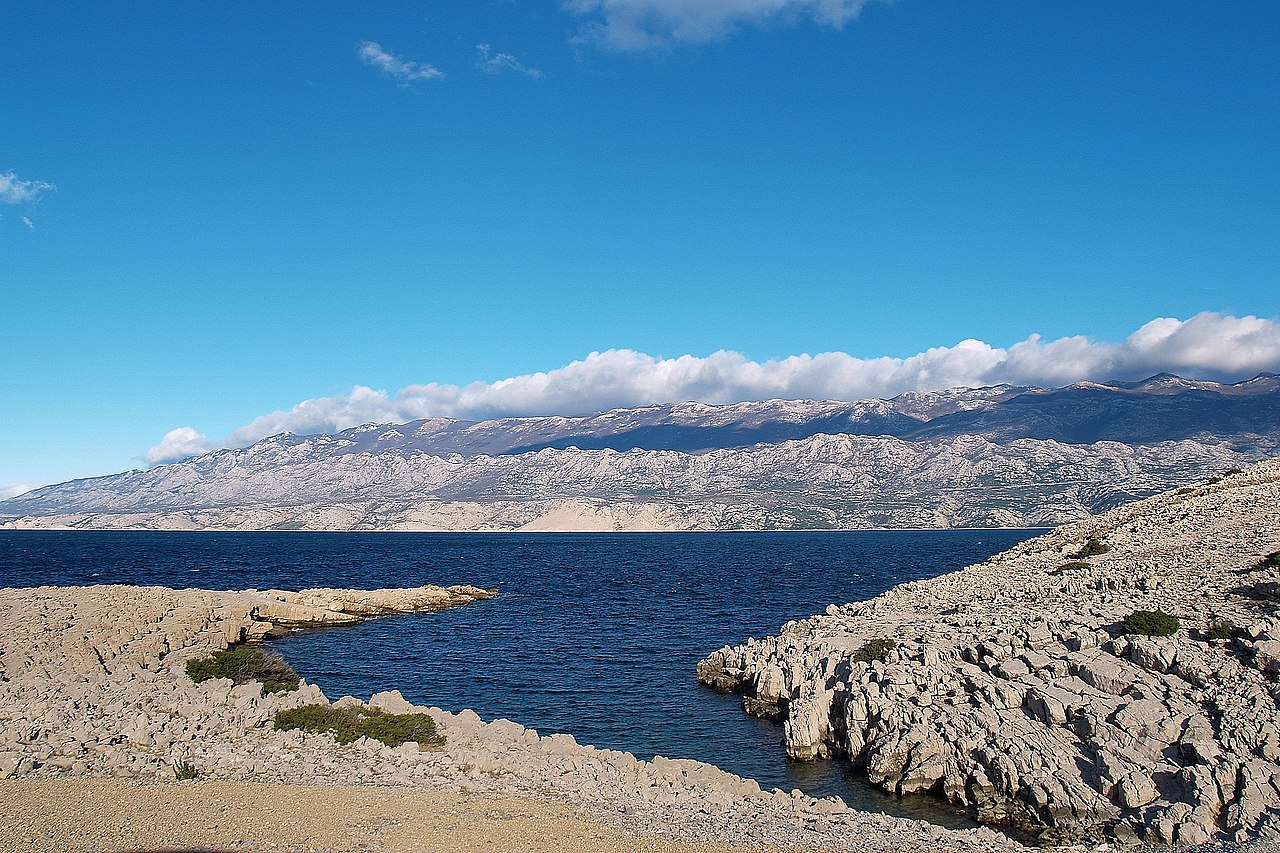
Behind Senj rises one of Croatia’s great landscapes. Northern Velebit brings limestone ridges, forests, botanical richness and a dramatic counterpoint to the blue Adriatic below.
Into Velebit ↗
Near Jablanac, Zavratnica folds deep into the foot of Velebit. The protected bay is reached on foot from the coast and belongs on any slow journey south of Senj.
Explore Zavratnica ↗“Senj is most powerful when you stop treating it as a stopover and start reading the landscape.”
A fortress is only the beginning. Understand the borderland history that gave Senj its reputation for resistance.
Read more →In 1494, Senj became home to one of the earliest printing presses in this part of Europe.
Read more →Why the famous northeasterly wind shapes architecture, travel rhythms and the psychology of the coast.
Read more →A cinematic coastal run toward Zavratnica, with Velebit rising almost straight from the water.
Read more →
Begin in the old town before the streets warm up. Visit the cathedral and harbour, climb to Nehaj for late-afternoon light, then return to the waterfront for a simple dinner as the town settles into evening.
Swim early if conditions are calm, then follow the coast south. Make Zavratnica the day’s anchor, or turn inland toward the Velebit landscape. Return to Senj for sunset from the hill above town.
Late spring and early autumn reveal Senj at its strongest: clear light, open landscapes and a slower rhythm. Summer brings swimming and long evenings; winter brings raw weather and the most dramatic expression of bura. Always check local conditions before exposed coastal or mountain excursions.
Use Senj as a hinge between the Kvarner coast, Velebit and the road toward northern Dalmatia. The strongest itinerary combines one cultural anchor, one wild coastal landscape and enough unplanned time to let the weather shape the day.
Senj lies on Croatia’s northern Adriatic coast, beneath the Velebit and Kapela mountain systems, on the coastal road between the Rijeka/Kvarner area and northern Dalmatia.
Nehaj Fortress, Uskok history, the bura wind, Glagolitic heritage and a rugged meeting of mountains and sea.
A focused day covers the old town and Nehaj, but two nights give enough time for beaches, a slower historic walk and an excursion toward Zavratnica or Velebit.
May–June and September–October are especially rewarding for walking and road trips. Summer suits swimming; winter is atmospheric but can be strongly affected by bura.